9 Common Signs It's Time to Invest in a 4WD Suspension Upgrade
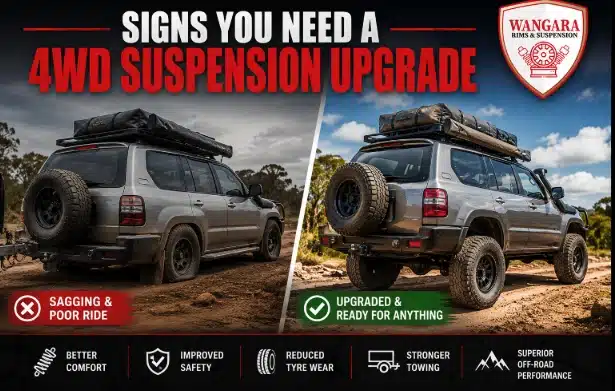
Your 4WD suspension plays a major role in ride comfort, safety, and off-road performance. When it starts wearing out, your vehicle will often show clear warning signs that shouldn’t be In this blog, we are going to explore the signs your 4×4 suspension is failing and help you understand when it’s time for an upgrade.
9 Signs Your Vehicle Needs a 4WD Suspension Upgrade
1. Rough or Bouncy Ride Quality
A rough, bouncy or unsettled ride is one of the earliest and most visible indications of suspension deterioration.
You’ll notice that the vehicle keeps bouncing after it has gone over the speed bumps or uneven road surfaces. Rather than absorbing those bumps well, the suspension begins to convey more of the movement into the cabin.
Usually, this is caused by worn shock absorbers. They are responsible for controlling the spring motion and keeping the tyres in contact with the road. As it ages, the vehicle may feel less steady and drive less comfortably. A good 4WD will help regain better control over bumps, while boosting comfort, handling and traction.
2. Rear Sagging Under Load
Have a look at your 4WD the next time it’s packed for a trip. If the rear end is sitting noticeably lower than normal, there’s a good chance the suspension is working harder than it was designed to. This is commonly caused by:
- Camping gear
- Drawer systems
- Toolboxes
- Canopies
- Tow ball weight
- Permanent accessories
Factory springs can only carry so much before they begin to sag. If your 4WD drops at the back every time it’s loaded, upgrading to springs and shocks that match your actual carrying requirements is the best long-term solution.
3. Nose Diving When Braking
Ever noticed the front of your vehicle dropping heavily when you brake at an intersection or while coming down a hill?
That movement is known as nose-dive.
A small amount is perfectly normal, but excessive forward pitch usually indicates the suspension is no longer controlling weight transfer effectively.
Old shock absorbers or weary springs might put too much weight on the vehicle in front when braking. Braking may be less “controlled” and put more stress on the front suspension parts.
4. Excessive Body Roll On Corners
If your 4WD is leaning substantially around bends, roundabouts or freeway ramps, your suspension may not be managing the body movement as well as it should.
This is what many drivers refer to as a “wallowy” feeling.
You may feel the car is slower to respond when turning, and you may find yourself making more steering corrections than normal. This can reduce confidence behind the wheel, particularly during longer drives.
Body roll becomes even more noticeable when the centre of gravity has been raised by accessories such as:
- Roof racks
- Rooftop tents
- Recovery gear
- Touring equipment
5. Uneven Tyre Wear Patterns
Your tyres are often the first place suspension problems show up.
If one edge of the tyre is wearing faster than the other, the tread looks patchy, or you’re seeing unusual wear patterns much earlier than expected, it could be time to make a suspension upgrade. Common warning signs include:
- Feathering
- Scalloping
- Cupping
- Excessive edge wear
6. Poor Handling and Wandering Steering
A healthy suspension system should help your 4WD track straight and respond cleanly to steering inputs.
If you constantly find yourself correcting the steering wheel on the highway or the vehicle feels vague and unsettled, the suspension may no longer be doing its job properly.
Many drivers describe this as the vehicle “wandering” within its lane. And in such a case, a suspension upgrade is needed to restore proper control.
7. Clunking, Rattling, or Squeaking Noises
In many cases, rattling or squeaking noises are caused by worn bushes, loose mounts, ageing shocks, or other suspension components that are no longer performing properly.
It’s easy to ignore these noises at first, especially if the vehicle still drives reasonably well. However, suspension-related sounds rarely fix themselves and often become worse over time. If the noise keeps returning, it’s usually a sign that the suspension needs inspection rather than another temporary fix.
These noises often show up:
- Over speed bumps
- On corrugated roads
- While turning
- When driving over uneven ground
8. Suspension Struggling with Heavy Loads or Accessories
Modern 4WDs rarely stay stock for long.
Bull bars, winches, canopies, roof racks, long-range fuel tanks, drawer systems, towing equipment, and recovery gear can add significant weight to the vehicle.
The problem is that factory suspension is designed around factory vehicle weights.
As more accessories are added, the suspension may begin to sit lower, feel harsher, bottom out more easily, or struggle to maintain stability.
When this happens, the suspension is no longer properly matched to how the vehicle is being used.
In WA, a GVM upgrade is treated as a formal modification that changes the vehicle’s load-carrying capacity, and the affected components include the suspension, brakes, steering, rims, and tyres. That’s a useful reminder that suspension upgrades are about much more than lift height. They play a major role in how safely and effectively the vehicle carries weight.
9. Scraping or Bottoming Out Off-Road
If you’re hearing the underbody scrape more often than you used to or the suspension is hitting its limits on tracks you used to be able to handle, it’s worth having a closer look.
Bottoming out occurs when the suspension has reached the limit of its travel and can no longer absorb the impact. It’s not just uncomfortable, but bottoming out regularly can also wear out suspension components more quickly and expose key elements under the car to damage.
In WA, adjustments to the spring height of up to 50 mm from the manufacturer’s specified spring are typically treated as a simple suspension alteration, while larger changes may require additional approvals and compliance considerations.
What Can Happen If You Delay a 4WD Suspension Upgrade?
Suspension problems are a big deal, and ignoring them can lead to a lot more than a bumpy ride. The suspension helps keep your tyres planted, limits body movement and supports the weight of the vehicle. Worn suspension parts can compromise safety, tyre life, towing performance and repair costs.
Reduced Vehicle Safety
Shock absorbers, springs and other suspension parts wear down and might make your 4WD difficult to control.
You could notice more nose-dive during braking, more body roll through corners, or the vehicle feeling unsettled on bumpy roads. Worn suspension can also lessen the contact your tyres have with the road, making it more difficult for safety systems like electronic stability control to do their job.
Sagging suspension can also impair headlight aim, lowering night visibility and even dazzling other drivers.
Increased Tyre Wear
Worn suspension components can also cause uneven wear patterns such as cupping, scalloping or excessive edge wear, when they no longer keep the wheels planted and aligned properly.
If not controlled, this can reduce tyre life, increase vibration and cause extra replacement costs.
Poor Towing Stability
Worn shocks or soft rear springs can throw the balance of the vehicle off and make it more prone to trailer sway. You may feel that the car is less stable in crosswinds, when passing trucks or when you make quick steering movements.
Damage to Other Components
With increased movement and vibration, greater stress might be exerted on bushes, ball joints, steering components, mounts and even aftermarket accessories.
Over time, this can cause rattles, loose connections and repairs that could have been avoided if the suspension problem had been dealt with sooner.
Higher Long-Term Repair Costs
In general, you will end up spending more in the long run if you postpone an upgrade to your suspension.
Early replacement of damaged shocks, springs or bushes can also assist in preventing premature tyre wear, repeated wheel alignments and damage to related components. In many circumstances, correcting the problem early costs significantly less than many repairs later.
Book Your 4WD Suspension Upgrade Today at Wangara Rims & Suspension
At Wangara Rims & Suspension, we specialise in 4WD suspension lift kits designed for Perth conditions, helping improve load carrying, ride height, and off-road performance.
We also provide wheel alignment services to correct handling issues and reduce uneven tyre wear, along with wheel balancing to improve ride smoothness and eliminate vibration.
Alongside this, we supply and fit rims, tyres, and 4WD accessories, giving you a complete upgrade solution in one place.
Call Us Now for a 4×4 Suspension Check