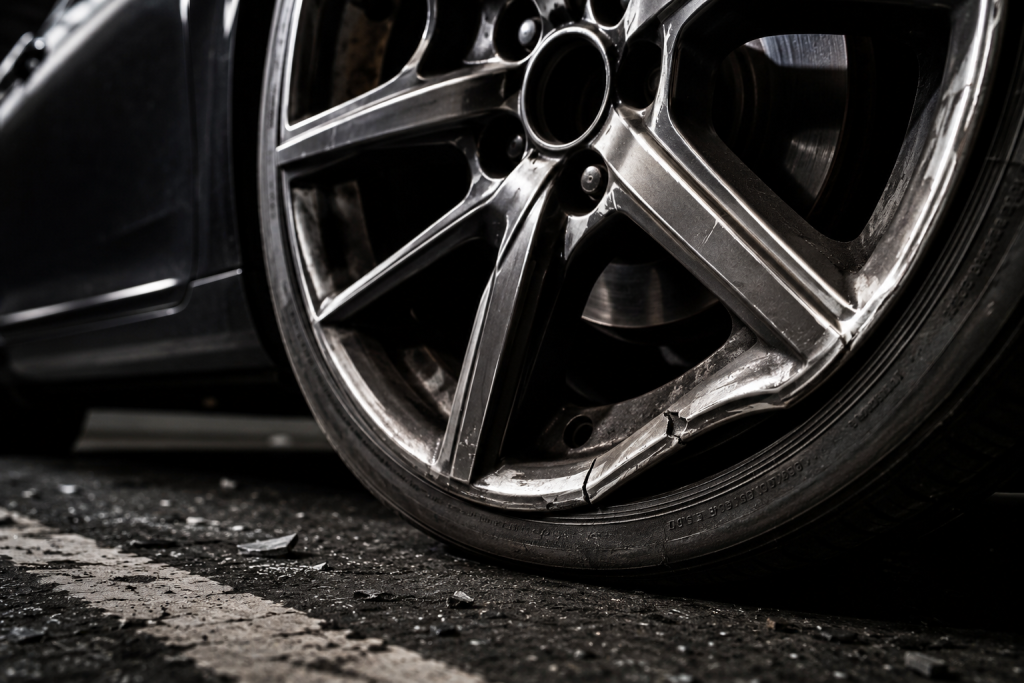
A bent or cracked rim usually shows up as steering wheel vibration, shaking seat, a persistent tyre pressure loss, visible dents or cracks, uneven tyre wear, or a car that feels harder to control and pulls to one side.
Most of these signs of bent rim can also come from a tyre problem, wheel imbalance, or an alignment issue, so knowing which one you’re dealing with matters before you spend money fixing the wrong thing.
Here’s how to spot the warning signs, check your own wheels safely, and know when it’s worth a proper tyre inspection.
What Are the Signs of a Bent or Cracked Rim?
Rim damage tends to announce itself in one of three ways:
- something you feel while driving
- something you can see when you look closely
- something you notice building up over days or weeks, like a tyre that won’t hold air
Running through each of the following can help you work out which category you’re dealing with:
Steering Wheel or Vehicle Vibration
Vibration is one of the clearest and most common signs something is wrong with a wheel. If it’s coming through the steering wheel, it usually points to a problem with one of the front wheels. If you feel it through the seat, the floor, or the body of the car instead, it’s more likely a rear wheel.
Many drivers also notice the vibration gets stronger, or only appears, at certain speeds, before easing off again as they slow down or speed up further.
It’s worth being upfront that vibration on its own doesn’t confirm a bent rim. Wheel imbalance, worn tyres, and worn suspension components can all produce a very similar feeling behind the wheel.
The Wheel Appears to Wobble
Sometimes a bent rim is visible in motion rather than at a standstill. If you can watch the wheel spin, either while someone slowly rolls the car forward or with the wheel jacked up off the ground, look at how evenly it rotates.
A true, undamaged wheel should spin in a smooth, consistent circle. A wheel that visibly wobbles, moves in and out, or looks like it’s tracing an uneven path as it turns is a strong indicator of a bent or deformed rim.
If you notice a wobble, it’s a good reason to get the wheel looked at properly rather than waiting to see if it settles down, since a wobbling wheel puts uneven stress on the tyre and suspension every time it rotates.
Your Tyre Keeps Losing Pressure
A tyre that keeps losing air, even when there’s no obvious puncture, is a common early sign of rim damage. The rim’s job is to hold an airtight seal against the inner edge of the tyre, known as the bead. When the rim is bent or cracked, even slightly, that seal can be broken in one spot, letting air escape slowly over days or weeks rather than all at once.
Before putting this down to a bent rim, it’s worth ruling out the more common causes of a slow leak:
- a small puncture from a nail or screw
- a faulty or corroded valve
- an older tyre that’s lost some of its ability to hold air
If you’re refilling the same tyre every week or two and none of those checks turn anything up, rim damage becomes a more likely explanation.
You Can See Bends, Dents, Flat Spots or Cracks
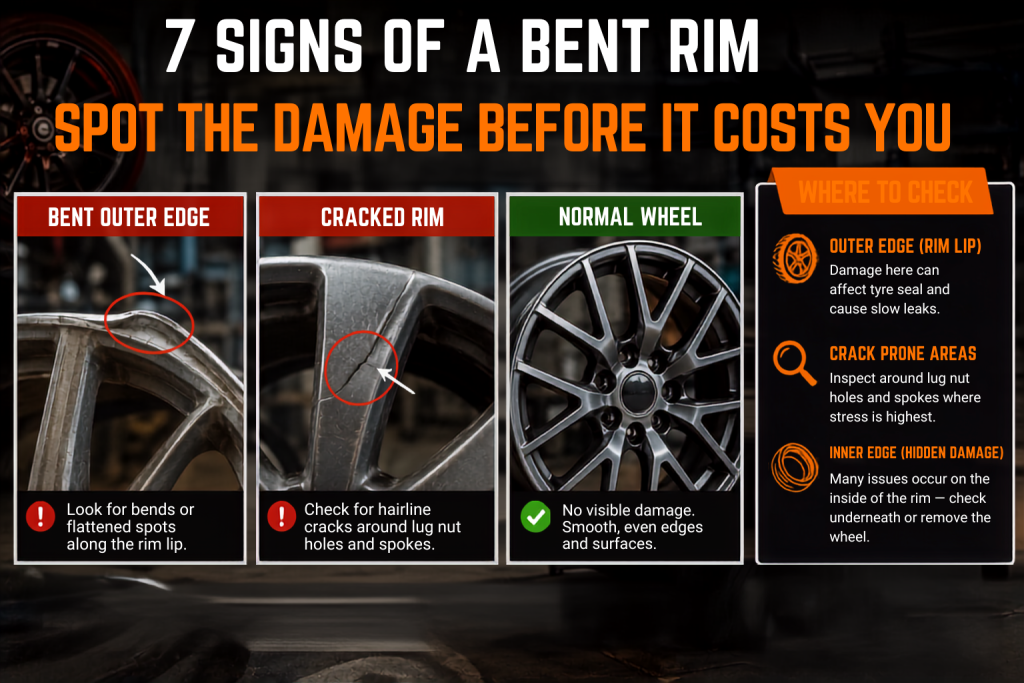
Visual damage is the easiest sign to confirm, once you know where to look. Run your eyes and fingers around the full outer edge of the rim and:
- check for flattened sections where the metal has lost its round shape
- look for dents from a kerb or pothole strike
- check any hairline cracks, which tend to show up first around the lug nut holes and spokes, where the metal is under the most stress.
Damage along the rim lip, the outer edge that sits closest to the tyre wall, is particularly worth checking closely, since even a small deformation there can break the tyre’s seal.
Additionally, a significant amount of rim damage happens on the inner edge, facing in towards the car, which sits close to the brake and suspension components and simply isn’t visible without a proper look underneath the vehicle or the wheel removed.
Your Tyres Are Wearing Unevenly
A bent rim changes the angle at which the tyre meets the road, even if the difference is too small to feel through the steering wheel. Over weeks of driving, that slightly altered contact patch shows up as wear that’s patchier or more concentrated on one section of the tread than you’d expect from normal use.
The catch is that uneven tyre wear is commonly linked to a wheel alignment problem than to a bent rim on its own. If your alignment is out, even slightly, one edge of the tyre will wear faster than the rest in a very similar pattern. T
hat overlap is exactly why uneven wear is best treated as a supporting clue rather than confirmation, and why a professional wheel alignment check is worth doing alongside a rim inspection rather than instead of one.
The Vehicle Pulls or Handles Differently
A car that consistently drifts or pulls to one side, even on a flat, straight road, or that feels noticeably less stable through corners than it used to, can be telling you something is wrong with a wheel. So, the steering feels heavier, looser, or less direct than normal.
It’s one of the harder signs to diagnose from the driver’s seat alone, which is exactly why comparing it against wheel alignment and balance issues specifically, further down, matters.
You Hear Unusual Thumping or Road Noises
A rhythmic thumping or knocking sound that rises and falls in time with your speed, rather than a constant noise, often has something to do with a wheel that isn’t rotating true. It can come from a bent rim, but the same kind of noise can just as easily come from a damaged tyre, a stone lodged in the tread, or a wheel bearing issue.
Noise alone isn’t enough to pin down the cause, but a thumping sound that gets faster as you accelerate and slower as you brake is a reasonably strong signal that the wheel assembly needs a proper look rather than being left until it becomes a bigger problem.
How to Visually Inspect Your Rim (Inner and Outer Edges)
Park on level, flat ground with the handbrake on, and follow this process if you’re comfortable jacking up the car:
- Check the outer rim lip first, running your eye and fingers around the full circumference for flattened sections, dents or gouges.
- Look for cracks, which are easiest to spot in the paint or clear coat around the lug nuts and spokes, where stress concentrates.
- Spin the wheel slowly by hand and watch the rim edge against a fixed reference point, such as the brake caliper. Noticeable wobble suggests the rim isn’t running true.
- Check the tyre seating. A rim that’s bent even slightly can leave a small gap where the tyre meets the wheel, instead of sitting flush all the way around.
- Remember the inner edge. A lot of rim damage happens on the side facing the inside of the car, which is genuinely difficult to see without removing the wheel.
If everything looks fine outside but you’re still getting vibration or pressure loss, the damage may be somewhere you can’t see from the driveway. If you’re not confident jacking up your own vehicle, a wheel and tyre technician can run the same checks more thoroughly.
Is It Safe to Drive with a Bent Rim?
It depends on how severe the damage is. A minor cosmetic bend on the outer edge, without vibration, air loss or handling changes, is generally low risk short-term. A bend affecting the tyre seal, causing persistent vibration, or making the car harder to control is a different situation and shouldn’t be driven on any longer than necessary.
Continuing to drive on a compromised rim can lead to a tyre blowout, since a damaged seal lets air escape faster than expected. It also strains suspension components not designed for an uneven rotating force, and reduces the predictability of braking and steering when you need it most.
Should You Repair or Replace a Bent Rim?
Whether a bent rim can be repaired or needs replacing usually comes down to three factors:
- how severe the bend is?
- whether there’s any cracking
- whether it’s an alloy or steel wheel
Minor bends on alloy wheels can often be straightened; anything involving a crack, or a bend close to the wheel’s structural centre, usually means replacement is the safer option.
Damage | Approach | Approx. Cost (per wheel) |
|---|---|---|
Minor bend, no cracking | Straightening | $150–$300 |
Severe bend or any cracking | Replacement | $600–$3,000+ |
The replacement range is wide because it depends on whether you’re fitting a standard, genuine or custom alloy wheel. Bring your wheel in and we’ll give you an accurate quote.
FAQs
- What are the signs of a bent rim?
Common signs include vibration, wobbling, repeated tyre pressure loss, visible deformation, uneven tyre wear, handling changes and unusual noises. These symptoms can have other causes, so inspection may be necessary.
- What causes a rim to bend or crack?
Most rim damage comes from hitting a kerb, a deep pothole, or rough or unsealed roads at speed. Corrosion and metal fatigue can also weaken alloy wheels, making them more likely to crack under impact.
- Should I have my wheel replaced if it’s cracked?
Generally, yes. Cracks compromise the wheel’s structural strength, and cracked alloy wheels aren’t considered safely repairable, so replacement is the recommended approach.
- Can I drive with a bent rim?
The risk depends on the severity of the damage. Avoid ignoring significant vibration, pressure loss, wobbling, handling changes or visible cracks, and arrange an assessment promptly.
- How long can I drive with a bent rim?
There is no universal safe driving period because rim damage varies significantly. If you suspect damage, particularly with pressure loss or handling problems, arrange an assessment rather than delaying based on time or distance.
- How can I visually inspect my rim?
Park safely and inspect the visible wheel face, outer rim lip and tyre-sealing area for bends, dents, flat spots and cracks. Remember that inner-edge damage may not be externally visible.
Not every one of these signs means your rim is beyond repair, but a few of them together, especially vibration, pressure loss or visible damage, are worth getting checked rather than waiting out.
Get Your Rim Checked by Wangara Rims & Suspension Specialists
If you’re in Perth and think your rim might be damaged, book an inspection at our Landsdale rim shop. Our team can check your wheels, tyres, balance and alignment to work out exactly what’s going on.
If your damaged rim needs replacing, we also stock a range of new wheels and rims to suit different vehicles, driving needs and budgets.
We’re based in Wangara and regularly help drivers from Landsdale and surrounding Perth suburbs.