
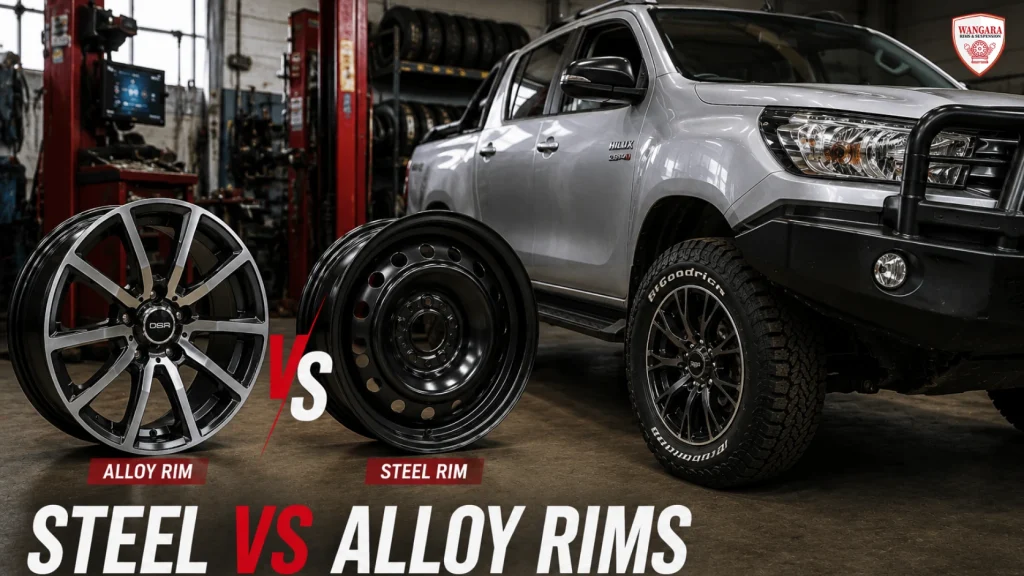
You are not the only one who is comparing alloy vs steel rims. Many Australian drivers ask themselves the same question, whether upgrading their car, replacing damaged wheels or setting up a 4WD for touring and off-road use.
The proper decision depends on how you drive, where you drive and what matters most to you. Alloy wheels are lighter, easier to handle and appear more modern. When things go nasty, robustness, price and repairability are the priorities of steel wheels.
From your everyday commute to your work ute or a fully loaded touring 4WD, knowing the difference between steel wheels versus alloy rims can help you pick the ideal setup for Australian roads and tracks.
What Is an Alloy Rim?
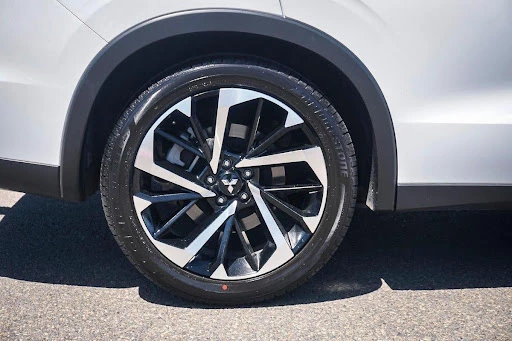
If you’ve ever asked what an alloy rim is, the answer is easy.
An alloy rim is a wheel built from a blend of metals, mainly aluminium but also other elements like magnesium or nickel. This build makes the wheel lighter than standard steel wheels while giving good strength.
Most current passenger cars, SUVs and performance vehicles come standard with alloy wheels since they are lighter, improve handling and are available in a wide choice of styles.
What Are Steel Rims?
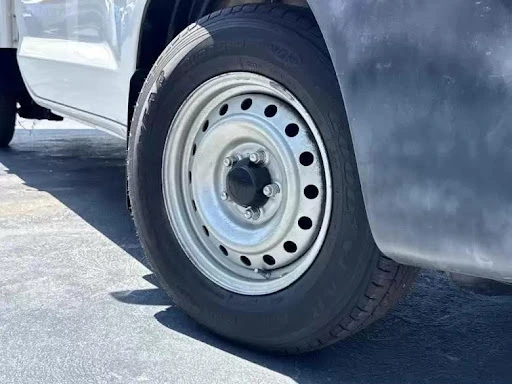
Steel rims are made of heavy-duty steel and are typically used on:
- Work vehicles
- Trailers
- Entry-level cars
- 4WDs for rough conditions
- Pure off-road or touring builds
They do well and are built to be more durable than they are pretty.
Alloy vs Steel Rims: The Key Differences
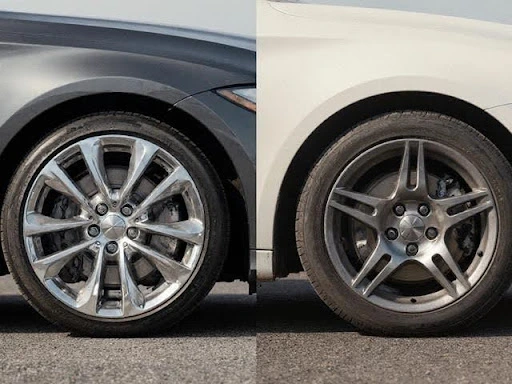
Weight and Performance
This is frequently the largest difference in the alloy vs steel rims discussion.
Alloy wheels are much lighter. It cuts down on what mechanics refer to as unsprung weight, helping your suspension to respond more quickly to bumps and road variations.
For you, that implies normally:
- More responsive steering
- More dexterous
- Improved brake feel
- Slightly better fuel economy.
Steel rims are heavier. The added weight can make acceleration and handling feel less responsive, yet some drivers appreciate the more planted feel on bigger vehicles.
Strength and Durability
When comparing steel or alloy rims, durability is important.
Steel rims are extremely durable. As a rule a heavy knock from a rock, pothole or uneven track will bend the wheel rather than fracture it. In rural regions, you can sometimes whack a buckled steel wheel back into something resembling shape enough to limp home.
Alloy wheels are tougher than most people imagine, but they are also more stiff. If alloy wheels are hit hard enough, they are more likely to break than bend and this might be impossible or very expensive to fix.
Fuel Economy
Alloy or steel rims can affect fuel use if you spend a lot of time driving about Perth or commuting every day.
Alloys are lighter, thus they put less load on the engine and tyres. The increase is generally small but over thousands of kilometres, lighter wheels can add up to higher overall efficiency.
Heat Dissipation and Braking
Alloy wheels are far better at dissipating heat than steel.
Your brakes put out a lot of heat during long travels, towing, steep descents and vigorous driving. Alloy rims help dissipate the heat more efficiently, which reduces the possibility of brake fade.
You won’t notice the difference in regular driving, but it pays dividends when the vehicle is working hard.
Appearance
If style counts, alloys usually win.
Alloy wheels come in:
- Black finishes
- Machined surfaces
- Bronze finishes
- Sleek designs
- Bold off-road styling
Steel wheels are usually more utilitarian looking and are often hidden by hubcaps on passenger vehicles.
Cost Comparison
Usually the cheapest route is steel rims.
Steel can save money up front and during ownership if you’re designing a budget-friendly set-up, replacing broken wheels on a regular basis or equipping a work vehicle.
Alloy wheels are more expensive to purchase and replace, but many drivers believe the better looks and performance make the extra cost worthwhile.
Alloy vs Steel Rims: A Comparison
Feature | Alloy Rims | Steel Rims |
Weight | Lightweight, improving handling and braking | Heavier, providing a more stable feel on heavier vehicles |
Performance | Better steering response, acceleration, and fuel efficiency | Reliable but can reduce acceleration and handling |
Durability | Strong but may crack under severe impacts | Highly durable and more likely to bend than crack |
Repairability | Repairs can be expensive or not always possible | Often easier and more affordable to repair if bent |
Rust Resistance | Naturally more resistant to rust and corrosion | Can rust if the protective coating is damaged |
Heat Dissipation | Excellent heat transfer, helping brakes stay cooler | Retains more heat than alloy wheels |
Appearance | Wide range of modern designs and finishes | Simple, practical appearance |
Cost | Higher purchase and replacement cost | More affordable to buy and replace |
Best For | Daily driving, SUVs, performance vehicles, and modern 4WDs | Work vehicles, heavy-duty 4WDs, off-road use, and budget-conscious drivers |
Steel Rims vs Alloy Rims for Different Drivers
Choose Alloy Rims If You:
- Drive primarily on paved roads
- Want a fresh, premium look
- Value handling and steering reaction
- Looking for a little better fuel economy
- Own an everyday driver, SUV or a performance car
Choose Steel Rims If You:
- Drive a commercial or work ute
- Spend time on bumpy roads
- Looking for the lowest replacement cost?
- Need high impact resistance
- Prioritise function above fashion
Do Steel Rims Last Longer Than Alloy?
Yes, in many circumstances.
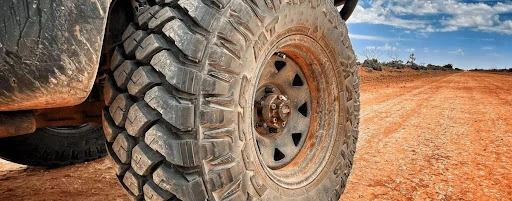
A well-maintained steel rim can last 10 to 15 years and more. Their worst enemy is rust. Corrosion can limit the lifespan of the car in coastal locations or areas where vehicles are exposed to salt and moisture if the protective coating is compromised.
Regular cleaning and early treatment of small rust spots will make steel wheels last much longer.
What Should You Avoid When Buying Automotive Rims?
Avoid these typical blunders when buying vehicle rims:
- Guessing the bolt pattern
- Ignore Wheel Offset
- Brake clearance, top Back view
- Selecting wheels that are too heavy for your configuration
- Purchasing second-hand wheels without checking for fractures, bending or damaged lug holes
- Just looks of the looks and not fitting and load rating
A wheel that fits right is always more vital than a wheel that looks good.
The Best Choice for Perth Drivers
For most drivers in Perth, alloy rims are the most well-rounded alternative. They are good for everyday driving, weekend getaways, towing and modest off-road activity, while boosting the look of the car.
If you’re undertaking major travelling, travelling in isolated areas, doing heavy-duty labour or driving in difficult off-road situations, steel rims are still a popular choice, as they’re tough, inexpensive and easier to cope with if you damage them far from help.
Many experienced 4WD drivers even utilise alloys on an everyday basis and carry a steel spare wheel for remote outings.
Final Verdict: Alloy or Steel Rims?
There is no clear winner in the alloy vs steel rim argument.
Want alloy rims? Then, alloy rims are the best choice:
- Better handling.
- Less weight
- Improved fuel economy
- Improved heat dissipation
- A fashionable look
If you desire steel rims are the better choice:
- Maximum durability
- Less expensive
- Simple field fixes
- A rugged off-road or work build
Consider where your car is parked most of the time. Alloys make the most sense normally if it’s mostly city streets and motorways. If it’s going to be carrying tools, dealing with rough tracks or going far from help, steel is well worth careful consideration.
Ready to Choose the Right Wheels?
The team at Wangara Rims & Suspension is available to assist you in determining whether steel or alloy rims are the optimal choice for your vehicle. We supply and fit premium wheels, 4WD rims, suspension upgrades, lift kits and provide professional wheel alignment and balancing to vehicles around Perth.
Pop into Wangara Rims & Suspension for experienced guidance, the appropriate fitment for your vehicle and a wheel package that complements the way you actually drive.
Frequently Asked Questions
Which is better, steel rims or alloy rims?
It is not possible to say that steel rims versus alloy rims have a better alternative for every driver. Alloy rims are great if you desire better handling, fuel mileage and a modern look. Steel rims are a superior choice if you’re looking for the most durable, affordable, and reliable performance for off-road or work cars.
What type of automotive rims are best?
The best car rims depend on the car you drive. Alloy wheels are good for everyday driving, but if you’re debating between steel or alloy rims, then steel rims are perfect for heavy-duty 4WDs, work utes and tough Australian conditions.
Do steel rims last longer than alloy?
Yes, steel rims may often outlive alloy wheels if they are properly cared for. When it comes to alloy versus steel rims, steel generally takes better to impact damage, but regular cleaning is essential to help avoid rust and corrosion.
Why are alloy rims expensive?
The alloy rim is more expensive since it is constructed of lightweight metals, such as aluminium, utilising advanced production technologies. Alloy wheels offer better handling, better braking cooling, less weight and more choice of premium styles than steel wheels.