How Often Should I Get My Wheels Balanced?
If you are wondering how often to balance wheels, there is no single mileage figure that suits every car. Wheel balance can change after tyre work, a pothole hit, a kerb strike or the loss of a wheel weight. Regular checks can also pick up a problem before the vibration becomes annoying.
For most Australian drivers, a balance check around 10,000 to 15,000 km is a useful maintenance point, with an earlier check needed if the car starts to feel different on the road.
How Often Does Wheel Balancing Need to Be Done?
A wheel balance check around 10,000 to 15,000 km is a sensible reference for regular maintenance. The actual timing depends on the condition of the wheels and tyres, the roads you drive on and any recent tyre work.
There is no Australian law that sets one compulsory wheel balancing interval for every passenger vehicle. The condition of the wheel and tyre assembly matters more than sticking rigidly to a number on the odometer.
Why Does Wheel Balance Change?
The wheel and tyre rotate together, so their weight needs to be spread evenly around the assembly. A small difference in weight can cause vibration once the wheel reaches road speed.
Balancing weights correct this difference. If a weight comes loose, a tyre is removed and refitted, or the wheel takes a hard knock, the balance can change.
Does Driving on Perth Roads Affect Wheel Balance?
It can. Potholes, rough roads and kerbs can put a sudden load through the wheel and tyre.
Perth drivers who spend time on rough roads, gravel tracks or off-road routes should pay attention to changes in steering feel and vibration. A new vibration after a hard impact deserves a check rather than being left until the next service.
When Should You Balance Your Wheels Sooner?
A scheduled maintenance check is only one reason to have your wheels balanced. A new vibration or recent tyre work can bring the job forward.
After Fitting New Tyres
New tyres should be balanced once they have been fitted to the wheels. The tyre and rim work as one rotating assembly, so both need to be considered during the balancing process.
This also applies when an existing tyre is taken off the rim and later fitted again.
After Hitting a Pothole or Kerb
A pothole or kerb strike can affect the balance of a wheel. In a harder impact, the rim or tyre may also suffer damage.
If the car starts vibrating after an impact, have the affected wheel checked. Balancing may solve the problem, but a damaged rim or tyre can produce a similar symptom.
After a Tyre Repair or Refitting
Removing a tyre from its rim changes the position of the tyre on the wheel. Once the tyre has been repaired and refitted, checking the balance can help restore the correct weight distribution.
A vibration that appears after tyre work is a good reason to have the wheel checked.
What Are the Signs Your Wheels Need Balancing?
The clearest signs your wheels need balancing are vibration through the steering wheel, shaking at certain speeds and changes in the way the vehicle feels while driving.
Steering Wheel Vibration
A steering wheel that shakes while the car is moving can point to an imbalance in one of the front wheel and tyre assemblies.
The amount of movement varies. You might notice a slight tremor through your hands or a much stronger shake at the wheel.
Vibration at Certain Speeds
Wheel imbalance can become easier to feel once the vehicle reaches a particular speed.
You may drive through lower speeds without noticing anything, then feel the vibration as your speed increases. The affected speed range varies with the vehicle and the amount of imbalance.
Vibration Through the Seat or Floor
A vibration that comes through the seat or floor can provide a clue that the issue may be towards the rear of the vehicle.
That symptom alone does not prove the wheel is out of balance. Tyres, wheels and other vehicle components can create similar sensations.
Uneven Tyre Wear
Uneven tyre wear has several possible causes. Incorrect tyre pressure, wheel alignment, suspension wear and wheel imbalance can all affect how a tyre wears.
For that reason, unusual wear needs a proper inspection rather than an automatic assumption that balancing is the problem.
If tyre wear is accompanied by steering issues or the vehicle pulling to one side, a wheel alignment service in Perth may also be worth considering.
A Missing Wheel Weight
Wheel weights are used to correct small differences in the weight of the wheel and tyre assembly.
If one falls off, the balance can change. A missing weight is a straightforward reason to have that wheel checked.
What Does an Unbalanced Wheel Feel Like?
The most common sensation is a shake or vibration that becomes noticeable while driving. In some cases, the vibration becomes stronger within a certain speed range.
Where you feel the vibration can offer a useful clue. A shake through the steering wheel can point towards the front wheels. A sensation through the seat or floor can point towards the rear.
There are other possible causes, too. A bent rim, tyre damage, alignment problem or worn suspension component can feel similar. A wheel balance check can help narrow down the cause.
Wheel Balancing vs Wheel Alignment: What Is the Difference?
Wheel balancing and wheel alignment deal with separate parts of the vehicle.
Wheel balancing | Wheel alignment |
Corrects uneven weight distribution in the wheel and tyre assembly | Corrects wheel angles to the vehicle manufacturer’s specifications |
Uses balancing weights | Uses specialist alignment equipment |
Often associated with speed-related vibration | Often associated with steering pull, an off-centre steering wheel or irregular tyre wear |
Common after tyre fitting or when imbalance is suspected | Useful after certain impacts or when alignment symptoms appear |
The two services can sometimes be needed at the same time, but they do different jobs.
If the steering wheel sits off-centre, the car pulls to one side or the tyres are wearing unevenly, read more about wheel alignment and its warning signs.
How Much Does Wheel Balancing Cost in Perth?
Wheel balancing cost in Perth depends on the workshop, vehicle, wheel size and the number of wheels being checked.
A useful local price reference is around $15–$30 per wheel, which puts a four-wheel balance at roughly $60–$120.
These figures are only a pricing guide. Workshop rates can change, and the final bill may be higher if the job involves additional tyre work, a larger wheel or another issue discovered during the inspection. Ask for the current price before booking.
What Happens During a Wheel Balancing Service?
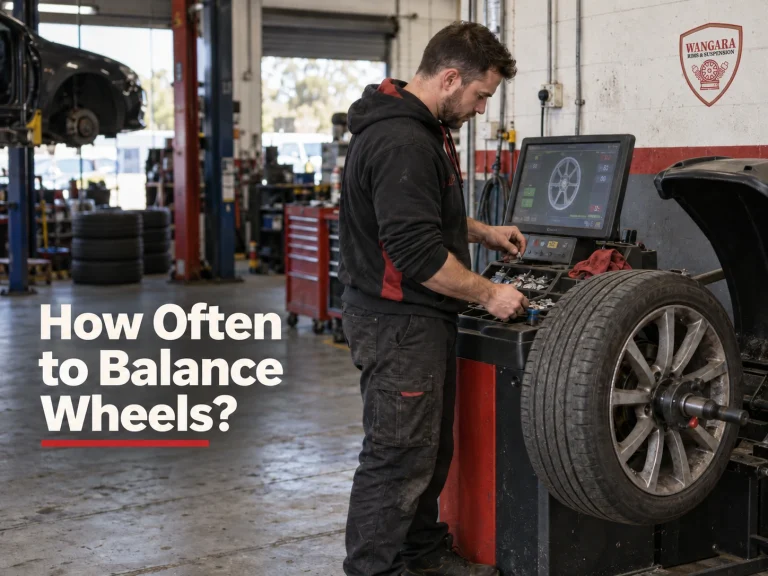
The wheel and tyre assembly is placed on balancing equipment. The machine spins the assembly and measures where the weight is uneven.
The technician then adds or adjusts small wheel weights at the required points. The wheel is spun again to check the result.
The aim is to bring the rotating assembly back into balance so it runs smoothly at road speed.
For drivers looking specifically for this service, the wheel balancing service in Perth page has further information.
What If Your Car Still Vibrates After Balancing?
A vibration that remains after balancing needs another look. The cause may sit somewhere other than wheel balance.
Possible causes include:
- A bent or damaged wheel
- A damaged tyre
- Incorrect tyre seating
- Wheel alignment problems
- Worn suspension components
- A wheel bearing problem
- Brake-related faults
This is why repeated balancing without checking the rest of the vehicle may not solve the problem.
If the vibration began after a pothole or kerb impact, tell the technician when the inspection is carried out. The timing and circumstances can provide a useful clue.
When Is the Best Time to Get Your Wheels Balanced?
For routine maintenance, 10,000 to 15,000 km is a useful point at which to have wheel balance checked.
You may want to bring the check forward if:
- You have fitted new tyres
- A tyre has been removed and refitted
- A wheel weight has fallen off
- The car develops a vibration at certain speeds
- You notice unusual tyre wear
- The vehicle takes a hard hit from a pothole or kerb
The condition of the wheels and tyres should have the final say on when the service is needed.
Get Wheel Balancing in Perth With Wangara Rims & Suspension
Wangara Rims & Suspension can check your wheels and balance them when needed. If your steering wheel is vibrating or you have recently fitted tyres, book a wheel balancing service at 5/220 Gnangara Rd, Landsdale WA 6065.
For bookings or enquiries, contact Wangara Rims & Suspension.
FAQs
Can wheel balancing fix a shaking steering wheel?
Yes, when the shaking comes from an imbalance in a front wheel and tyre assembly. If the steering wheel still shakes after balancing, the technician should check for another source.
Do alloy wheels need wheel balancing?
Yes. Alloy wheels still need the correct weight distribution around the wheel and tyre assembly. The wheel material does not change that requirement.
Can incorrect tyre pressure cause vibration?
Incorrect tyre pressure can change the way a vehicle feels on the road and can contribute to uneven tyre wear. Checking tyre pressure is a simple first step when the car feels different.
Is wheel balancing needed on all four wheels?
A technician may check all four wheel and tyre assemblies, especially when tyres are being replaced, or a vibration has developed. The balance readings determine which wheels need adjustment.